

How and why do zebras have white and black stripes?
It’s all determined by the interaction of genes and skin cells
The zebra’s white and black stripes have been an intriguing evolutionary puzzle in terms of biology.
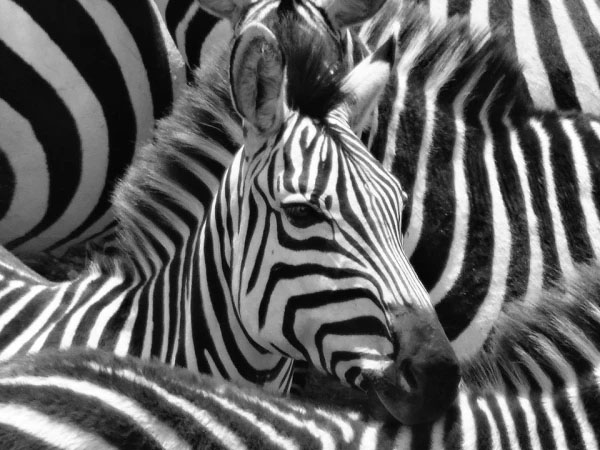
According to today’s scientific research, these stripes arose from a combination of several evolutionary factors, the strongest evidence of which is related to the development of skin cells, temperature regulation, protection from mosquitoes and insects, and social identification.
1. Biological structure of the stripes
The zebra’s basic color is actually black, and the white stripes are areas where melanin, the pigment-producing cells, is not produced.
During the embryo, the melanin-producing cells in the zebra’s skin cells are activated or deactivated in a specific way. Where these cells remain active, black stripes are formed. Where they become inactive, white stripes are formed.
All this is determined by the interaction of genes and skin cells, in particular by a specific natural mechanism (similar to the stripes of a lion or the spots of a leopard).
2. Evolutionary reasons
Scientists have given several theories, of which five stand out:
a) To repel insects and mosquitoes
Research has shown that tsetse flies and other blood-sucking mosquitoes cannot easily land on a body with black-and-white stripes. These stripes change the polarization of light, which distracts mosquitoes. This theory is considered the most accepted.
b) To control temperature
Black color absorbs more heat, while white color less. These subtle changes in temperature on the zebra’s body create a gentle breeze that keeps the body cool. This is especially beneficial in hot African regions.
c) To confuse predators
When a herd of zebras is on the move, their stripes make it difficult for predators (lions, etc.) to judge distance and direction — this is called motion dazzle.
d) Social identification
Each zebra has a unique pattern of stripes, like human fingerprints. Zebras can recognize each other, mother and calf, or members of the herd through these stripes.
e) Protection from parasites and infections
Some scientists believe that the stripes also protect the skin from infections or insect eggs sticking to it.
3. Current scientific conclusion
According to various experimental evidence, zebra stripes are formed for a combination of reasons, but the strongest evidence is in favor of “insect protection”.